
Charging an e-bike battery indoors can be practical, but it should never be casual. In an apartment, one damaged pack or blocked exit can affect more than the rider. The safest routine is simple: use the correct undamaged charger, choose a clear location away from combustibles, remain present, and stop immediately when a battery or charger behaves abnormally.
This apartment checklist applies to lithium-ion e-bike batteries generally, including removable packs used with Dakeya bikes. The exact battery label and owner’s manual always control. Do not improvise with a charger merely because its plug fits, and do not open a battery enclosure.

The five-minute apartment charging checklist
- Inspect first: look for cracks, swelling, leakage, crushed areas, damaged cables, loose charge ports or corrosion.
- Confirm the match: compare battery chemistry, nominal system, required charger output, connector and polarity with the manual and labels.
- Choose the location: use a dry, stable, hard surface with ventilation, away from paper, bedding, curtains, solvents and direct heat.
- Protect the exit: never charge in a hallway, stairwell, doorway or any route people need to escape.
- Stay present: charge while awake and able to respond. Do not leave for work or go to sleep.
- Disconnect when complete: follow the manufacturer’s sequence and timing; do not leave a completed pack connected indefinitely.
The U.S. Consumer Product Safety Commission micromobility guidance warns consumers to use supplied or approved charging equipment, be present during charging, and never charge while sleeping. FDNY lithium-ion battery guidance likewise emphasizes approved equipment, clear exits and immediate attention to warning signs.
Step 1: inspect after every impact, drop or wet ride
A battery can look ordinary after a hard event yet still deserve professional assessment. Before bringing it into a living space, check the case, mounting rails, lock, charging port and cable area in good light. A new dent, split seam, rattling sound, burnt mark, chemical odor, unusual heat, swelling or fluid means: do not charge it. Move people away, avoid touching leaking material, and contact local emergency services if there is smoke, hissing or fire.
Do not “test” a suspicious pack by plugging it in. Do not tape over a cracked case, bypass a battery-management system or replace internal cells yourself. Contact the seller or qualified service provider for model-specific handling and disposal instructions. Damaged lithium-ion batteries should not go in household trash or ordinary recycling bins.
Step 2: match the charger, not just the connector
A connector that physically enters the port proves only that it fits. Safe compatibility also requires the correct battery chemistry, charger output voltage and current, plug wiring and polarity. The label on the delivered battery and charger is more important than a similar-looking online photo. If either label is unreadable, pause and ask support.
Dakeya’s active 48V 15Ah Hailong-style battery, for example, is listed as a 720Wh lithium-ion pack with a 54.6V charge limit and DC5521 charge port; its product page requires a compatible 54.6V lithium-ion charger and states that a charger is not included. That fact does not make every 54.6V charger suitable: connector, polarity and permitted current still need confirmation. Review the Dakeya charger options, then confirm the exact delivered configuration before ordering.
Step 3: build a safer charging zone
Pick one repeatable location rather than charging wherever an outlet happens to be. Keep the charger uncovered so heat can dissipate. Do not put it on a sofa, mattress, rug or pile of clothing. Avoid extension cords and multi-plug adapters unless the manufacturer explicitly permits them and the electrical setup has been assessed as appropriate. A loose, scorched or warm wall outlet requires an electrician—not another charging attempt.
Keep children and pets away from the cable and pack. The area should be dry and protected from rain, condensation and cleaning spray. It should also be visible: a closed closet, sealed cabinet or storage box can trap heat and hide early warning signs. Smoke alarms should be present and working according to local requirements, but an alarm does not make unattended charging safe.
Step 4: supervise the complete charge
Connect only in the sequence stated by the manual. During the first minutes, verify that the indicator behaves normally and no connector is loose or sparking. Recheck periodically. Some charger warmth and fan noise may occur by design, but rapidly increasing heat, repeated shutdowns, crackling, hissing, smoke, swelling or a sharp solvent-like odor are not “wait and see” symptoms.
If anything abnormal occurs, stop charging if you can do so without approaching a smoking or burning device. Evacuate, close the door behind you when safe, and call emergency services. Do not carry a burning battery through an occupied building and do not rely on a home experiment to extinguish it. Follow fire-department directions.

How to store an e-bike battery indoors
Storage is different from active charging. Follow the manual’s recommended state of charge, temperature and inspection interval, because there is no single percentage that suits every pack. Choose a cool, dry place away from direct sun, heaters, cooking areas, flammable liquids and metal objects that could bridge exposed contacts. Protect the pack from being dropped or crushed.
Do not store a battery in a common corridor, under stairs or against an apartment door. If the pack is removable, use any terminal cover provided and keep keys where children cannot operate the battery. Periodically look for swelling, corrosion or temperature change without opening the case. A pack that has been stored for months should be inspected and handled according to its manual before charging.
Apartment decisions: charge, pause, or evacuate?
| Observation | Action |
|---|---|
| Pack and charger undamaged; labels match; normal indicators | Charge on the designated hard surface while awake and present. |
| Unreadable label, borrowed charger, loose port, damaged cable | Do not connect. Ask the manufacturer or qualified support to identify the correct equipment. |
| Pack was dropped, submerged, crushed or involved in a crash | Do not charge indoors. Isolate people from the risk and obtain professional guidance. |
| New swelling, odor, hissing, popping, smoke or extreme heat | Leave the area, warn others and call emergency services. |
What certification language can—and cannot—tell you
Independent safety standards can evaluate electrical systems, batteries or chargers, but wording matters. UL Solutions explains micromobility testing and certification; a component recognition, transport document or seller statement is not automatically certification of the complete e-bike system. Verify the exact model and scope rather than assuming one logo covers every part.
The Hailong battery page states that transport documentation and component documentation are available, while explicitly saying the product is not represented as a UL Listed product and does not claim certification of the complete e-bike electrical system under UL 2849. This is why buyers should read precise claims and request model-specific documents rather than converting one document into a broader promise.
Frequently asked questions
Can I charge an e-bike battery overnight?
No. CPSC and FDNY guidance advises against charging while sleeping. Charge while awake, present and able to disconnect normally.
Is a garage automatically safer than an apartment?
No. A garage may still contain fuel, paint, cardboard, vehicles and blocked exits. Apply the same inspection, charger-matching, hard-surface, ventilation and supervision rules.
Should I remove the battery from the bike?
Follow the exact manual. If removal is permitted, support the pack securely and avoid damaging contacts. Never force a pack or charge it where removal creates a fall hazard.
Can I use a timer or smart plug?
Only if the manufacturer explicitly approves it. A timer cannot inspect damage, detect odor or replace human supervision, and an unsuitable plug can introduce another failure point.
Where can I learn about the bike itself?
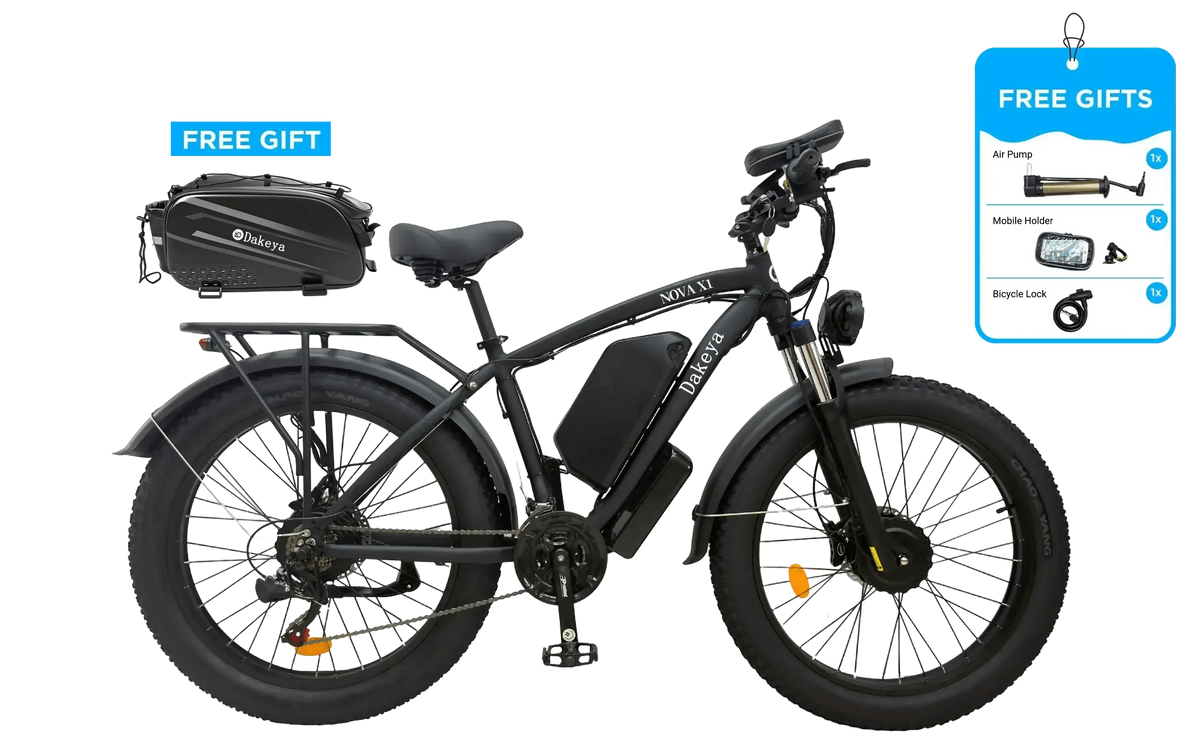
Use the verified NOVA X1 and DA03 pages as starting points, then rely on the manual and labels supplied with your exact unit.
Save this routine before the next charge
Inspect, match, clear the area, protect the exit, stay awake and disconnect as directed. Those habits are more valuable than any improvised accessory. If you need a replacement battery or charger, send Dakeya support clear photos of both labels, the charging port and the bike model before buying. That creates a safer path to the correct part without guessing.


Share:
How to Carry Cargo on an E-Bike: Weight, Packing and Safety