
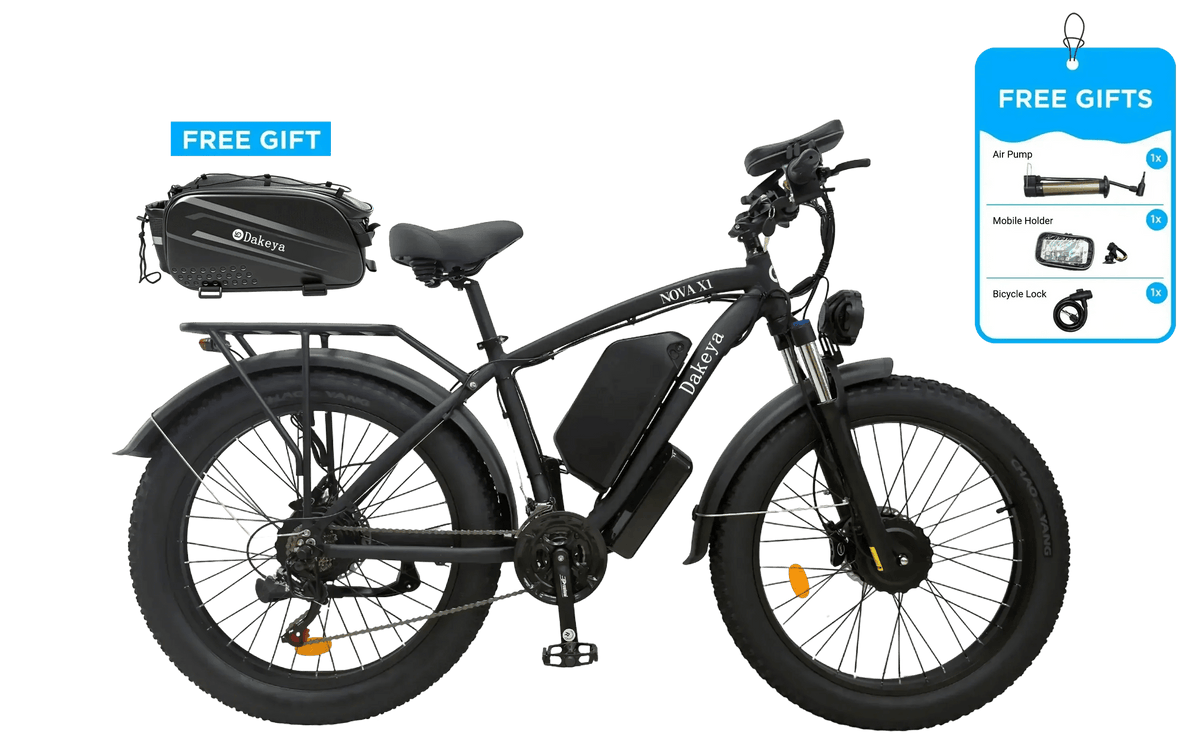
Carrying cargo on a high-power fat-tire e-bike is mainly a weight-distribution problem, not a test of how much can be strapped to the frame. Keep every item within the bike and rack limits, place dense cargo low and centered, protect it from wheels and moving parts, and complete a slow handling-and-braking test before entering traffic. A securely fitted 10-liter trunk bag can organize daily essentials; bulky or heavy loads may require a different setup or a second trip.

Why e-bike cargo changes the ride
A bag may look small while containing dense objects such as a chain lock, tools, water and a spare battery. Added mass increases the energy the brakes must manage, can lengthen stopping distance, and changes how the bike steers at walking speed. A load mounted high or behind the rear axle also makes the front end feel lighter. Side-to-side imbalance can pull the bike off line when starting, cornering or pushing it up a ramp.
Fat tires and motor power do not cancel these effects. Motor assistance can make acceleration feel easy even when the total mass is high, which is exactly why the rider should evaluate braking and low-speed control separately. The U.S. Consumer Product Safety Commission recommends checking brakes, tires and other critical components before a micromobility ride; its micromobility safety center is a useful baseline.
Step 1: calculate a real cargo allowance
Start with the bike's combined limit
The current NOVA X1 product page states a maximum total combined rider-and-cargo weight of 400 lb and separately lists a 120 lb rear-rack maximum. These are two different limits. Neither number should be exceeded, and the lower applicable limit controls.
Use this planning formula: available combined capacity = bike limit − dressed rider − fitted accessories − other cargo. For example, if a fully dressed rider is 220 lb and permanently fitted accessories plus lock weigh 15 lb, the theoretical combined capacity is 165 lb. That does not authorize 165 lb on the rack: the rack's own limit is lower, and real handling may call for substantially less.
Count everything riders often forget
- Helmet, boots, riding jacket and a full water bottle
- Lock, mirrors, phone mount, pump and tool kit
- Rack, basket or child-seat hardware added after purchase
- The bag itself, not only its contents
- Any trailer tongue load, if a trailer is explicitly approved
Never infer a rack rating from its appearance. If a label, manual or product page does not provide the value, ask support before carrying a heavy load. Do not attach a passenger seat or child seat unless the bike and carrier are specifically approved for that use.
Step 2: choose storage by the job
Rear trunk bag: best for compact daily items
The Dakeya 10L hard-shell rear rack bag is listed at 17 × 6.6 × 7.8 inches, approximately 9.5–10 liters of usable volume and 1.96 lb. It uses adjustable rack straps and includes a detachable shoulder strap. That makes it appropriate for organizing a lunch, gloves, small tools, wallet, keys or a compact pump, provided the actual rack fit and total mass are acceptable.
“10 liters” describes volume, not weight capacity. A bag filled with metal tools can overload a mount long before it looks full. The listing describes weather-resistant construction and sealed zippers, but sensitive electronics should still go in an internal dry pouch because damage, wear, poor closure and prolonged exposure can defeat weather protection.
Panniers: useful when low, balanced capacity matters
Matched panniers can place weight lower than a top bag. They must provide heel clearance and remain clear of the tire, brake, drivetrain and motor cable. Balance left and right by measured weight rather than appearance. A single light pannier can be fine; one very heavy side bag can make slow turns awkward.
Backpack: only for light personal items
A backpack keeps cargo off the bike, but it raises the rider's carried mass and can increase fatigue, heat and injury risk in a fall. Avoid hard, sharp or heavy objects against the spine. For dense everyday cargo, a properly rated bike-mounted solution is usually easier to manage.

Step 3: pack heavy items low and forward
- Make a complete inventory. Weigh the loaded bag with a household scale rather than guessing.
- Put dense items at the bottom. Keep them close to the rack platform and as far forward as fit allows without contacting the rider.
- Stop internal movement. Use dividers or soft padding so a lock or tool cannot shift during a turn.
- Balance both sides. For panniers, compare measured masses and redistribute fluids or tools.
- Close every zipper and buckle. Tuck loose webbing so it cannot reach spokes, tire, chain or brake rotor.
- Keep lights visible. Cargo must not cover the taillight, reflector or turn signals where fitted.
Do not hang shopping bags from the handlebar. Swinging bags interfere with steering and can enter the front wheel. Do not clamp straps around battery cables, brake hoses or suspension parts. Nothing should contact a hot brake rotor or obstruct battery removal.
Step 4: inspect the attachment, not just the bag
Before every loaded ride, pull the bag in every direction. The rack should not rock at its frame mounts, straps should remain tight, and hooks or buckles should be fully engaged. Confirm tire clearance while compressing the suspension within normal use. Check that no fastener is missing and no rack tube, weld or mounting point is cracked or bent.
The Dakeya DA03 and NOVA X1 have different frame and suspension layouts, so a fit that works on one model should not be assumed on the other. Ask Dakeya support to confirm the bike, rack and accessory combination if any mounting point is uncertain.

Step 5: run a five-minute loaded test
Walking inspection
Power the bike off and walk it through a tight turn. Listen for rubbing and feel for the load shifting. Confirm that the kickstand supports the parked bike only on firm, level ground; hold the bike while loading because a heavy bag can tip it.
Low-speed control test
In a traffic-free area, start in a low assistance setting. Ride straight, make wide turns, then progressively tighter turns without abrupt steering. Test both brakes gently, then more firmly at a controlled speed. If the front end wanders, the rear feels vague, or stopping is noticeably less predictable, reduce or reposition the load.
Recheck after the first mile
Stop safely and check straps, fasteners and clearances again. Soft contents settle and webbing can loosen. Repeat this check after rough surfaces. The National Highway Traffic Safety Administration's bicycle safety guidance emphasizes predictable riding, visibility and helmet use; those habits become more important when handling is altered by cargo.
Weather, batteries and valuable items
Keep battery terminals, chargers and electronics dry. Do not carry a loose battery where metal objects can reach its terminals, and do not use a pack that is swollen, cracked, leaking, unusually hot or has been seriously impacted. Follow the bike and battery manuals for transport and storage. A “waterproof” marketing description is not permission to submerge a bag or ride through conditions outside the bike's rating.
For visibility, use working front and rear lights and do not rely on reflective trim alone. The Centers for Disease Control and Prevention notes that a properly fitted helmet can help protect cyclists; see its transportation safety overview. Replace a helmet after a significant impact according to its maker's instructions.
Common cargo mistakes
- Using the bike's total limit as if it were the rack limit
- Counting only cargo and forgetting rider, clothing and accessories
- Loading the top and rear of the bag first
- Leaving a U-lock or chain free to slide inside the bag
- Covering the rear light or allowing straps near the wheel
- Assuming motor power means braking and steering are unchanged
- Carrying a passenger on a rack not approved for passengers
- Starting a normal commute without a loaded practice test
Frequently asked questions
How much weight can I put on a NOVA X1 rear rack?
The current listing states a 120 lb rack maximum and a 400 lb combined rider-and-cargo maximum. Both apply. Use the lower remaining allowance after counting rider, accessories, bag and all cargo, and reduce the load if handling is not stable.
Is a 10L bag large enough for commuting?
It can hold many compact daily essentials, but confirm your actual objects against the listed dimensions. Volume does not determine safe mass, and a laptop or fragile electronics need additional protection.
Should heavy cargo go in a backpack or on the rack?
A correctly rated, securely attached, low-mounted bike setup is often easier to manage than carrying dense weight on the rider. The best choice depends on verified limits, fit, handling and the load itself.
Can cargo block the taillight if the bag has reflective strips?
No. Reflective material depends on an external light source and does not replace a visible working taillight or legally required reflector.
Final cargo checklist and CTA
Weigh the complete setup, obey the bike and carrier limits, pack dense items low and centered, secure loose straps, preserve light and wheel clearance, and test braking in a controlled area. For compact daily storage, review the Dakeya 10L rear rack bag; for fit or load questions, send support your exact bike model, rack photos, cargo weight and intended use before ordering.


Share:
E-Bike Brake Pad Replacement: 7 Signs, Fit Checks and Safe Bedding
How to Charge and Store an E-Bike Battery Safely Indoors: Apartment Checklist