
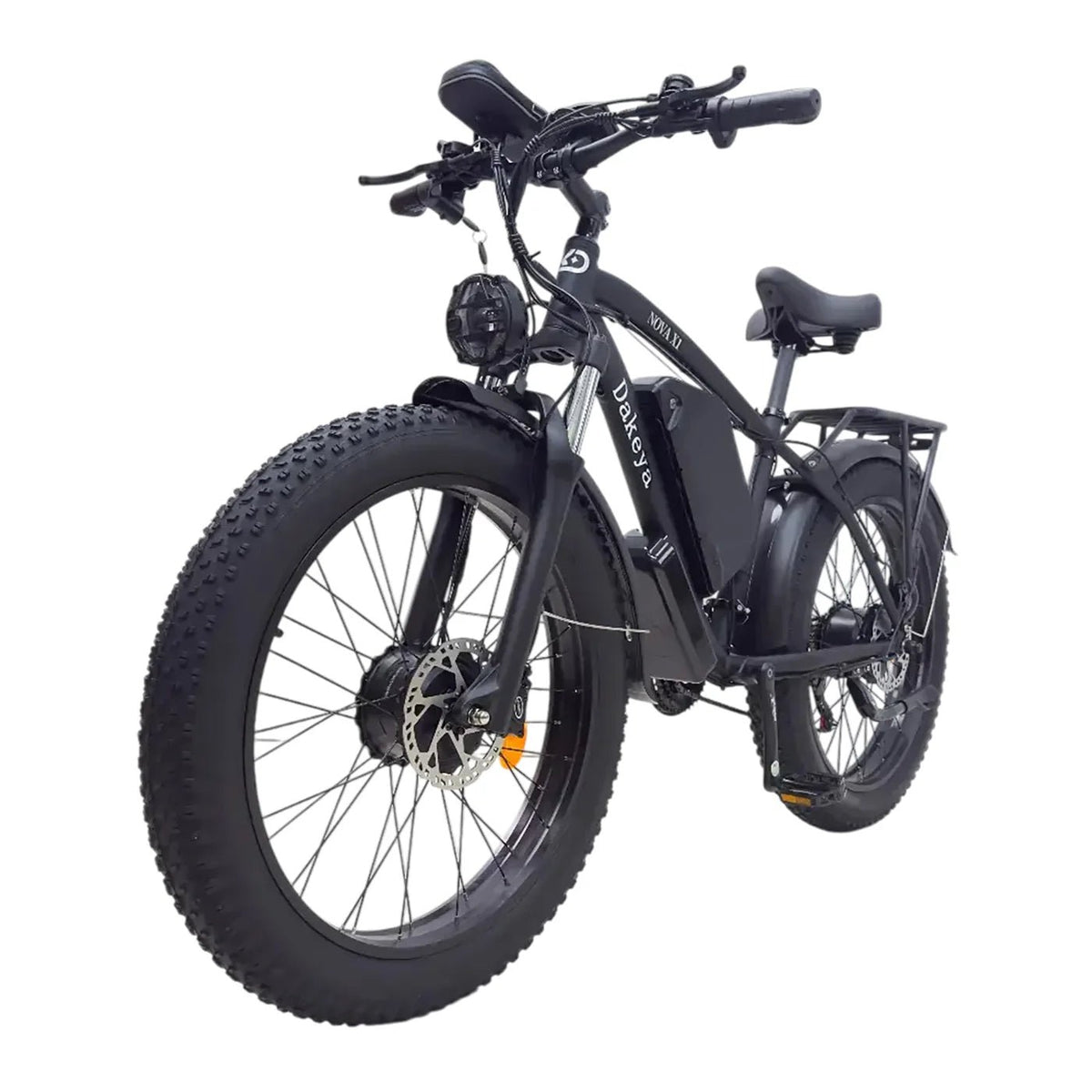
Choosing between a 24-inch and 26-inch fat-tire e-bike is not the same as choosing a clothing size. Wheel diameter affects how a bike meets bumps and how much space the wheels occupy, but it does not tell you whether the frame fits your body—or whether the complete bike fits your doorway, elevator, rack, truck, or SUV.
24-inch vs. 26-inch: what the number actually tells you
The labels describe nominal wheel/tire categories, not rider-height categories. A bike with 24-inch wheels can still have a long reach or a high top tube. A 26-inch bike can have geometry that feels accessible to some riders. Frame layout, saddle adjustment, handlebar position, crank placement, tire outside diameter, and suspension all shape the real fit.
That is why statements such as “24-inch is for short riders” or “26-inch is for tall riders” are unreliable without verified geometry. Your total height is only a starting point. Inseam, torso length, arm length, mobility, riding posture, and the way you start and stop matter more than a wheel label alone.

NOVA X1 vs. DA03 at a glance
| Decision point | NOVA X1 | DA03 |
|---|---|---|
| Tires | 24 × 4.0-inch fat tires | 26 × 4.0-inch fat tires |
| Suspension | Front suspension | Front + center suspension |
| Battery | 60V 25Ah (1500Wh nominal) | 60V 25Ah (1500Wh nominal) |
| Motor rating supplied for comparison | 6000W combined peak | 5500W combined peak |
| Fit evidence needed | Standover, saddle range, reach and riding posture | Standover, saddle range, reach and riding posture |
| Space evidence needed | Complete length, width and height; turning clearance | Complete length, width and height; turning clearance |
| Terrain reason to shortlist | Fat-tire traction and front suspension; potentially easier space planning if verified dimensions support it | Larger wheel and front-plus-center suspension may favor rougher, uneven routes |
Peak power is not continuous power, and it does not establish legal e-bike classification. Specifications can change; verify the current product page and manual before purchase.
Step 1: measure your body for fit
Measure inseam and compare it with standover height
- Wear the shoes you expect to ride in.
- Stand with your back to a wall and your feet approximately pedal-width apart.
- Place a rigid book between your legs, level and snug as a saddle would feel.
- Measure from the floor to the top edge of the book. Repeat twice.
- Compare that number with the manufacturer-confirmed standover height at the point where you would stand over the frame.
You should be able to dismount and stabilize the bike without painful contact or losing balance. The clearance you need varies with footwear, terrain, mobility, and confidence; do not invent it from a generic chart.
Check saddle-height range, not just minimum saddle height
A saddle must go low enough for controlled starts and stops, but also high enough for comfortable pedaling. Ask for the measured range from the pedal at its lowest practical position to the top of the saddle, and confirm how that measurement was taken. A saddle that is too low can make pedaling cramped; one that is too high can cause rocking or force you to reach for the ground.
Check reach and control access
Reach is the relationship among saddle, handlebar, and your torso and arms. You should not have to lock your elbows, strain your back, or slide forward just to steer. Confirm that you can operate both brake levers and controls while maintaining a stable grip. Photos may show the bike’s layout, but perspective makes them unsuitable for measuring reach.

Step 2: measure the entire route from curb to storage
A bike can fit your body and still fail your home. Measure the complete path, not only the final parking spot.
- Doors and gates: record the narrowest clear opening with the door fully open. Include handles, hinges, trim, and thresholds.
- Hallways and corners: measure width and the turning area at every 90-degree corner. Overall bike length and handlebar width both matter.
- Elevators: measure door width, cabin width, depth, and diagonal. Confirm building rules and whether the bike can remain upright.
- Stairs: consider total bike weight, landing size, handrail clearance, and whether safe two-person handling is realistic.
- Storage: allow room for the handlebar, pedals, tires, kickstand, charger access, ventilation, and a secure locking point.
Do not assume the 24-inch NOVA X1 is automatically shorter or narrower overall. Wheel size can influence packaging, but geometry and components determine the complete footprint. Obtain current assembled dimensions for both bikes and compare them with your measurements, leaving practical maneuvering clearance rather than planning for a perfect, no-margin fit.
Step 3: verify vehicle and rack compatibility
For an SUV, van, pickup, trailer, or hitch rack, measure the loading opening, interior length and height, and the space between wheel wells. Then verify complete bike weight, wheelbase, tire width, and whether accessories change the load. A hitch platform must support the bike’s actual loaded weight per tray, fit 4.0-inch tires, and remain within the hitch and vehicle tongue-weight limits.
Removing a battery may reduce lifting weight when the manual permits it, but it does not change wheelbase. Never assume a standard bicycle rack is suitable for a high-power fat-tire model. Use the detailed fat-tire e-bike transport guide before selecting a rack or loading method.

Step 4: choose for the terrain you actually ride
On smooth pavement, parking-lot maneuvers, and routes with frequent stops, confident fit and predictable control usually matter more than a two-inch nominal wheel difference. On broken pavement, gravel, roots, and shallow ruts, a larger wheel generally meets an obstacle at a shallower angle. That can make the 26-inch DA03 worth considering, while its center suspension adds another element for managing uneven surfaces.
The NOVA X1 still uses 4.0-inch fat tires and front suspension, so “24-inch” does not mean pavement-only. Tire pressure, tread, rider technique, load, speed, and surface conditions can matter as much as wheel diameter. Fat tires can improve flotation and traction on some loose surfaces, but they do not create unlimited grip. Sand, wet leaves, ice, deep mud, and loose corners still require reduced speed and smooth inputs.

High power changes the legal and safety checklist
The NOVA X1’s 6000W combined peak and the DA03’s 5500W combined peak are far above the power figures commonly associated with ordinary Class 1, 2, or 3 e-bikes. Depending on configuration, speed capability, and jurisdiction, either bike may fall outside those classes and may be restricted on public streets, bike lanes, paths, or trails.
Before riding, check state law and the rules of your city, county, park, trail manager, and landowner. Requirements may cover motor power, assisted speed, throttle use, helmet use, age, registration, licensing, insurance, and permitted locations. The PeopleForBikes state-by-state e-bike law resource is a useful starting point, but local authorities provide the controlling answer.
Start in the lowest effective mode in a controlled area. Read NHTSA’s bicycle safety guidance, wear an appropriately certified helmet, and inspect brakes, tires, steering, fasteners, and battery security before riding. For battery and charging precautions, consult the U.S. Consumer Product Safety Commission’s e-bike safety information.
A five-minute decision worksheet
- Fit: Write down your inseam. Obtain verified standover, saddle range, and reach information for both models.
- Home: Record the narrowest door, smallest elevator dimension, tightest corner, and final storage footprint.
- Transport: Record vehicle opening dimensions and every relevant rack, hitch, and vehicle weight limit.
- Terrain: Estimate the share of your riding on smooth pavement, broken pavement, gravel, sand, or rough trails.
- Rules: Confirm where the intended configuration can legally be operated.
If a required measurement is missing, do not guess from a product photo. Check the user manuals and installation guides or contact Dakeya with your inseam, door/elevator measurements, vehicle plan, and typical terrain. For power, suspension, and feature differences beyond wheel size, read the full NOVA X1 vs. DA03 comparison.
FAQ
Does a 24-inch e-bike fit shorter adults?
Not automatically. A smaller nominal wheel may help package a bike differently, but fit depends on standover height, saddle-height range, reach, and frame geometry. Compare verified measurements with your body and mobility.
Is a 26-inch fat-tire e-bike always better off-road?
No. A larger wheel can roll over some obstacles more smoothly, but suspension, tire pressure and tread, traction, speed, load, and rider technique also matter. Choose for your real routes, not a wheel-size slogan.
Will the NOVA X1 fit through a standard door?
“Standard” is not precise enough. Measure the clear door opening and obtain the bike’s current assembled width, including the handlebar. Also test the approach angle and turning space.
Can either bike go on a normal car bike rack?
Do not assume so. Verify actual bike weight, 4.0-inch tire compatibility, wheelbase, per-bike tray rating, total rack rating, hitch rating, and vehicle tongue-weight limit. A heavy-duty platform rack or another rated transport method may be necessary.
Are the NOVA X1 and DA03 Class 3 e-bikes?
Do not infer classification from the product name or wheel size. These high-power configurations may not qualify as ordinary Class 1, 2, or 3 e-bikes. Classification and permitted use depend on the bike’s configuration and applicable state and local rules.
Final action: choose the bike that clears every test
Shortlist by terrain, but decide only after the fit, home, transport, and legal checks all pass. The 24-inch NOVA X1 may be the practical choice when its verified geometry and complete footprint suit you. The 26-inch DA03 may be the stronger match when its fit and storage work and you want its larger wheel and front-plus-center suspension for rougher routes. If either model fails one critical clearance or fit measurement, the wheel-size debate is already settled.
Author and source note: Prepared by the Dakeya E-Bikes editorial team using current model specifications supplied for the NOVA X1 and DA03, Dakeya product/manual resources, and public safety and legal references from NHTSA, PeopleForBikes, and the U.S. CPSC. Product photographs illustrate the models only and were not used to derive dimensions or rider-height claims. Verify current specifications and local rules before purchase or operation.


Share:
Your First 10 Rides on a High-Power E-Bike: A Progressive Setup Plan
What Real Riders Say: NOVA X1 and DA03 Review Comments