
Comparing Full-Suspension Electric Mountain Bikes for Real Trails
Full-suspension electric mountain bikes (eMTBs) are built for technical terrain - roots, rocks, off-camber turns, and long descents - where traction and control matter as much as raw power. If you’re moving beyond gravel paths and flowy green trails into real single-track, this guide explains what full suspension actually does, how much travel you need, how it affects range, and where a model like the Dakeya Da03 fits.

Why Full Suspension for “Real Trails”?
A full-suspension eMTB adds a rear shock to the front fork, so both wheels remain planted when the trail gets choppy. That extra contact patch means:
-
More traction while climbing loose, stepped sections
-
Better control when cornering through rough turns
-
Lower fatigue on long descents (you’re not the shock absorber)
How much travel is “enough”? As a reference point, modern MTBs typically span ~100–170 mm of suspension travel depending on use case - XC at the short end, trail/endure in the mid-to-long range. Travel is simply how far the fork or shock can compress to absorb impacts. The Pro's Closet
Hardtail vs Full-Suspension: Which Suits Your Trails?
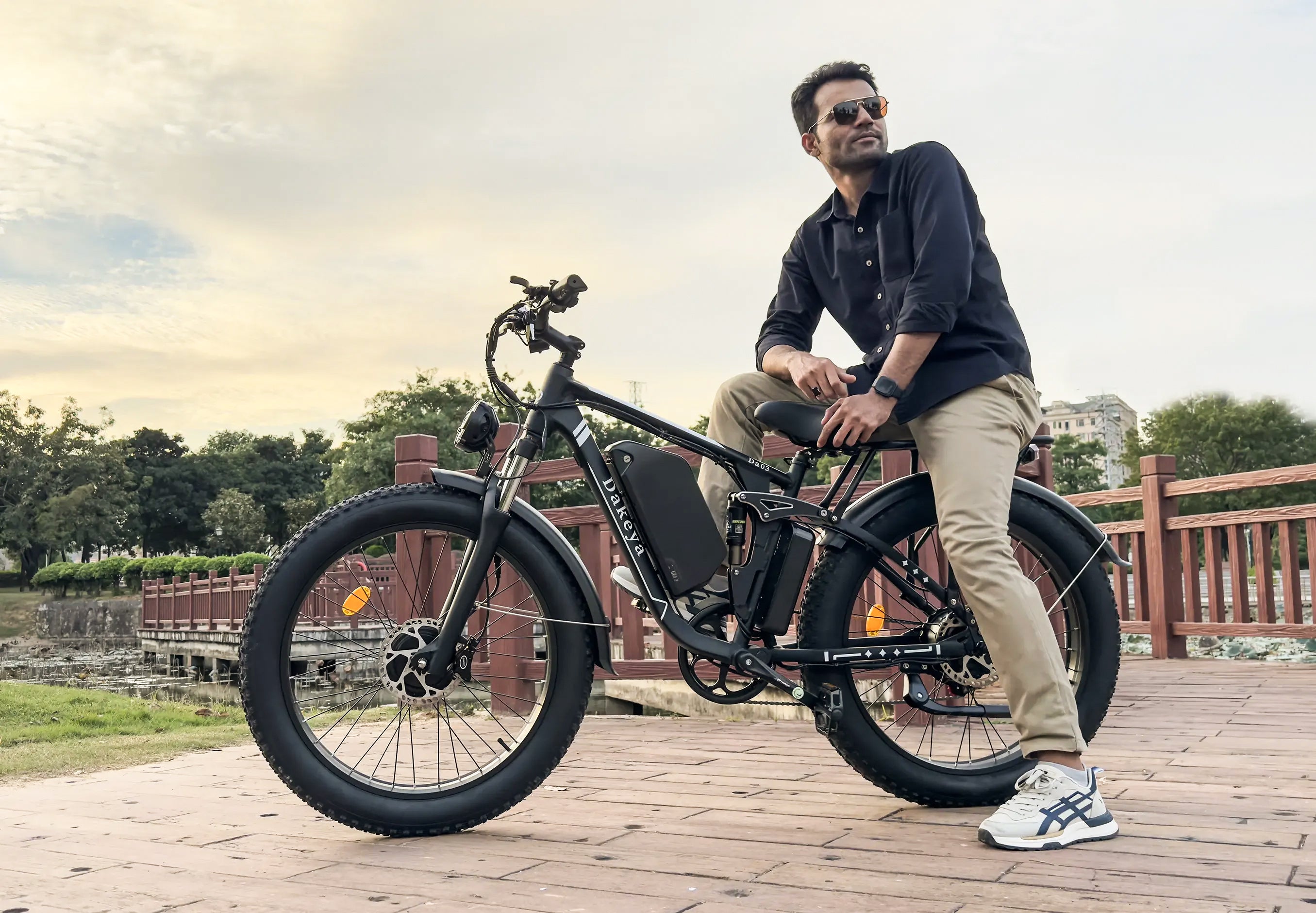
Spotlight: Dakeya Da03 Suspension Layout (Front + Center)

-
Front Suspension: Aluminum-alloy oil-spring hydraulic fork, 120 mm (4.7") travel, with adjust/lockout to match terrain.
-
Middle / Central Suspension: Center shock (6.5" length, 2" travel) to absorb successive hits and maintain stability.
-
Load Capacity: Rated up to 1000 lbs; always verify loading in your owner’s manual and local regulations for safe operation.
This configuration targets the classic “trail” use case—enough travel to flatten repeated bumps and square edges, with the efficiency to pedal back up. For product specifics, see Dakeya Da03 full-suspension eMTB
Why 120 mm matters: Industry buyer guides note that ~120 mm is a common starting point for full-suspension trail bikes, giving sufficient cushion for most off-road scenarios without the extra weight of long-travel enduro setups. westbrookcycles.co.uk
How Full Suspension Changes the Ride (and Battery)
-
Traction & comfort: Rear suspension keeps the wheel glued to uneven ground - less skipping, more control.
-
Energy use: On very smooth surfaces, full suspension can consume a bit more energy than a hardtail due to additional movement and weight - something riders notice on paved transfers, but much less on rough trails where suspension helps maintain momentum. Canyon
Tip: Correct suspension setup (sag, rebound, compression) is critical. Tuning helps you use travel efficiently without harsh bottom-outs. Reputable how-tos cover setting sag, rebound, and spring curve (volume spacers) step by step. bikeradar.com
What to Look For in a Full-Suspension eMTB
-
Travel & Kinematics
-
Trail bikes commonly run 120–150 mm travel front/rear. Pair travel with your terrain: more chunk = more travel. The Pro's Closet
-
-
Fork Type & Adjustability
-
Lockout and rebound adjustments let you firm things up on climbs and open it for descents.
-
-
Rear Shock Location & Leverage
-
The central shock on Da03 helps distribute impacts and maintain a stable center of mass.
-
-
Frame & Hardware
-
Stout aluminum linkages, quality bearings, and hardware that resists play over time.
-
-
Brakes & Tires
-
Hydraulic discs for consistent stopping; match tire casing and tread to rocky roots vs. loose over hard.
-
-
Motor Class & Legal Use
-
In many US regions: Class 1 (pedal-assist to 20 mph), Class 2 (20 mph with throttle), Class 3 (28 mph pedal-assist). Trails often restrict Class 2/3, so check local rules. Class systems explained by Aventon
-
Compare: Dakeya Da03 vs. Typical Full-Suspension Alternatives
Below is a neutral comparison to illustrate how the Da03’s suspension package sits next to a typical entry-level full-suspension eMTB and a longer-travel option. (Specs for third-party bikes vary by model year - always check the brand’s site.)
| Category | Dakeya Da03 |
HJMBIKE Warrior |
Lacros Thunder |
|---|---|---|---|
| Front travel | 120 mm hydraulic, adj/lock | ~120–130 mm typical | ~150–170 mm typical |
| Rear suspension | Central shock, ~2" shock stroke | Linkage-driven shock, ~120–130 mm travel | Linkage-driven shock, ~150–170 mm travel |
| Ride focus | Technical trails, all-day comfort, stability under load | Mixed touring + daily trail; “gateway” FS | Steeper, rougher lines; higher descending speeds |
| Energy use | Efficient at trail pace; more controlled on choppy sections | Efficient, slightly less planted on repeated hits | Heavier; best planted on big terrain |
| Who it suits | Riders stepping into real single-track who want control without excess weight | New FS riders balancing off-road + commuting | Riders prioritizing descending performance |
As a reference for entry-level full-suspension positioning, outlets like E-MOUNTAINBIKE Magazine regularly test accessible FS platforms such as Canyon’s Neuron. E-MOUNTAINBIKE Magazine
Browse our Dakeya eMTB collection for travel, battery, and frame options across models.
Real-World Setup Tips (Quick Checklist)
-
Set sag (typically ~25–30% of travel for trail) and rebound to avoid harsh kickback. bikeradar.com
-
Use lockout on smoother climbs; open compression for descending.
-
Tire pressure: lower for traction on roots/rock; monitor rim strikes on eMTBs with heavier system weights.
-
Maintenance: keep pivots torqued, fork/shock serviced at recommended intervals.
Where Da03 Stands
If your riding includes rooty connectors, rock gardens, and extended descents, the Dakeya Da03 full suspension eMTB combines:
-
120 mm adjustable/lockout hydraulic fork for front-end control
-
Central rear shock for continuous traction and comfort
-
High load rating (up to 1000 lbs, per spec; always follow manual guidance)
That mix aims at trail stability and comfort without the extra weight of long-travel enduro builds.
Trail Access & Regulations (Important)
Many land managers apply e-bike class rules differently on natural-surface trails. Before you ride:
-
Confirm whether your local trails allow Class 1 only, or if Class 2/3 are allowed.
-
Keep firmware within legal limits and follow posted rules. Good primers: Aventon’s class explainer.
Conclusion
A full suspension electric mountain bike is the right tool when your terrain turns rough and you want to ride longer with more control. The Dakeya Da03 places its emphasis on usable trail travel (120 mm front), a central rear shock for stability, and adjustability that helps the bike adapt from climbing to descending. If you’re moving into “real trails,” that combination delivers the traction, comfort, and confidence most riders notice on day one.
- Explore Dakeya Da03
-
See other models: Dakeya electric mountain bikes


Share:
Comparing Electric Mountain Bikes in the $2,000 Range
How to Choose the Right Electric Bike in 2026: A Complete Buyer’s Guide