
Quick answer: E-bike theft prevention combines a suitable primary lock, a secure anchor, thoughtful parking and records of the bike's identity. Additional locks and component security can add layers, but no setup guarantees against theft.
A high-value electric bike needs more than a cable lock. A practical theft-prevention plan combines a strong primary lock, a second lock with a different mechanism, a secure anchor, careful parking, a record of the bike’s identity and sensible battery/key handling. No setup makes an e-bike impossible to steal, but layering these steps can make it harder to attack, easier to identify and less attractive than a poorly secured bike nearby.
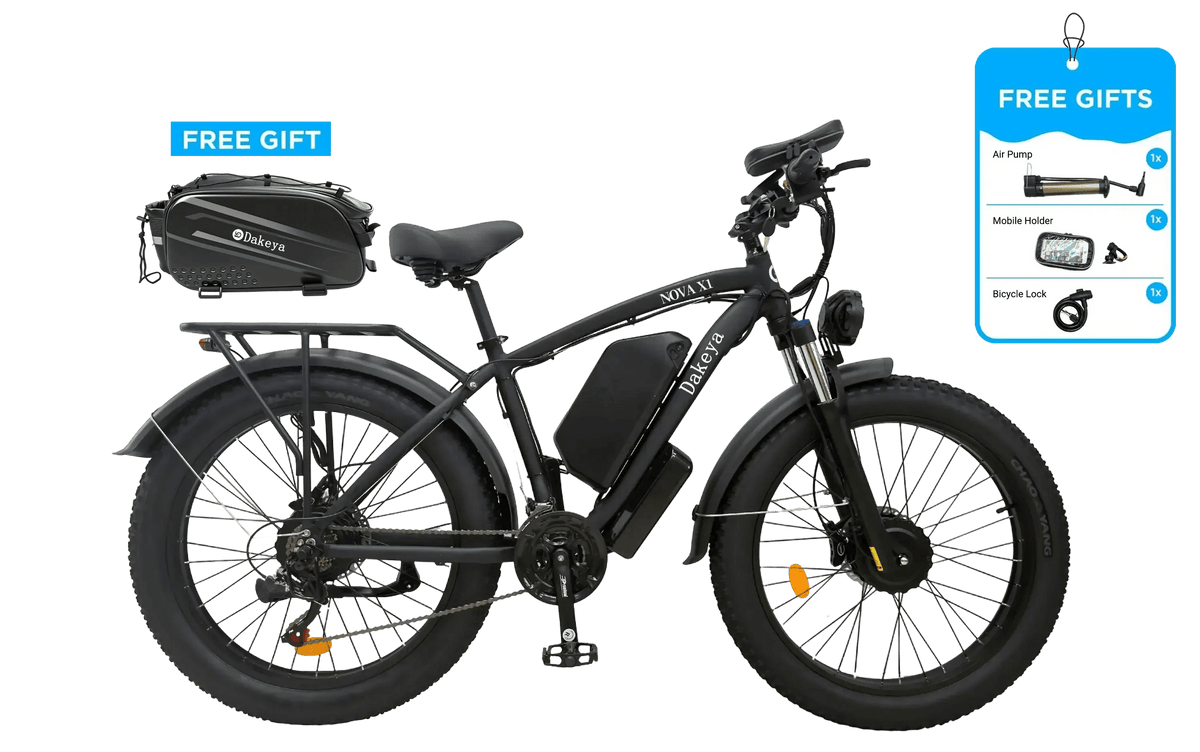
This guide is written for heavy, high-performance fat-tire e-bikes such as the Dakeya NOVA X1 and Dakeya DA03. It does not assume that one lock or an app replaces good judgment. Instead, it gives you a repeatable system for home storage, short stops and longer parking.

Why e-bike security needs layers
Electric bikes combine valuable electronics, removable components and recognizable frames. Their size and weight may discourage casual lifting, but they can also prevent an owner from carrying the bike indoors. A thief does not need to defeat every component if the bike is locked only by a quick-release wheel, attached to a weak fence or left with an accessory that can be removed in seconds.
Think in layers: delay, visibility, identification and recovery preparation. A primary lock should delay an attack. The parking location should make suspicious behavior conspicuous. Registration and photographs should make the bike easier to identify. None is sufficient alone.
Step 1: choose a primary lock for the real parking risk
A thin cable is useful for securing a helmet or adding a minor secondary barrier, but it should not be the only protection for a high-value e-bike. For routine public parking, begin with a reputable U-lock or a heavy chain and closed-shackle padlock sized to capture the frame and a solid anchor without leaving excessive open space.
- U-lock: compact, usually easy to carry and difficult to attack when the shackle is closely filled.
- Heavy chain: flexible around unusual racks and thick frame sections, but heavier to transport.
- Folding lock: convenient and adaptable, although security depends on the exact model, joints and rating.
- Cable: best treated as a secondary accessory lock rather than the main defense.
Do not buy by thickness or marketing language alone. Compare independent security ratings where available, lock dimensions, weight and whether the lock can actually pass around the bike’s main frame section and the racks you use. A lock left at home because it is impractical protects nothing.
Step 2: lock the frame to an immovable anchor
The frame is the core of the bike. Passing a lock only through the front wheel can leave the rest of the bike unprotected. Route the primary lock through a substantial frame section and a rack that is firmly installed in the ground. Check that the rack cannot be lifted out, unbolted easily or cut at a thin section.
- Position the bike close to the rack with the drivetrain facing away from foot traffic.
- Pass the primary lock through the frame and the secure rack.
- Fill empty space in the lock so tools have less room to work.
- Keep the lock body and keyway off the ground where possible.
- Confirm the frame cannot be lifted over the top of the anchor.
A signpost is not automatically safe: verify that the bike and lock cannot be lifted over it and that parking there is permitted. Never block a doorway, accessible path, emergency exit or pedestrian route.

Step 3: add a second, different lock
A second lock makes a thief spend more time and may require a different tool or technique. Use it to secure the other wheel to the frame or to create a second frame-to-rack connection. Two identical locks can still help, but two different mechanisms—such as a U-lock plus a chain—create a more complicated target.
Fat tires, large wheels and suspension components can make common locking diagrams unrealistic. Test your setup at home. The lock must not pinch brake hoses, motor cables, spokes or suspension parts. Do not route a lock only around a removable seatpost, rack or accessory.
Step 4: choose the parking location before the lock
A strong lock cannot improve a weak anchor or a hidden location. Prefer a purpose-built rack in a well-lit, active area with regular foot traffic. Park where the bike is visible to you or legitimate building users, not behind a dumpster, hedge or isolated corner. Cameras can support an investigation but should not be treated as a physical barrier.
For a very short stop, do not assume “I can see it through the window” is enough. Lock the bike every time. For hours-long or overnight parking, indoor access is strongly preferable. Ask your employer or building manager for a secure bike room or controlled-access area rather than repeatedly leaving a high-value e-bike outside.
Step 5: manage the battery, keys and removable parts
Remove the key after locking the battery and confirm the battery is fully seated. Never leave the ignition or battery key in the bike. If the battery is designed to be removed and the destination allows you to carry it safely, taking it with you can reduce the bike’s immediate utility to a thief—but it does not replace locking the frame.
Removing a battery also requires care. Avoid dropping it, exposing the contacts to metal objects or storing it near heat or moisture. Follow the owner’s manual. The U.S. Consumer Product Safety Commission’s micromobility guidance advises following manufacturer directions and checking devices for damage.
Take displays, lights, bags, cameras and tools with you when they can be removed quickly. If you use the Dakeya 10L rear rack bag, treat it as cargo storage—not as a secure vault for keys, identification or valuable electronics.
Step 6: document and register the bike now
Do this before a theft, not after. Save the serial number, purchase record, model, color and distinctive details. Photograph both sides of the complete bike, the serial-number area and any unique marks. Keep the files somewhere you can access if the bike itself and your phone are unavailable.
Registration services such as the nonprofit Bike Index and the industry-supported Project 529 Garage allow owners to record identifying information. Registration does not guarantee recovery, but it can help connect an identified bike with its owner. Also check whether your local police department or university offers a registration program.
Step 7: improve security at home
A closed garage is not automatically secure. Lock the bike to an anchored ground or wall point inside, keep garage doors and side doors closed, and avoid leaving tools next to the bike. Do not post real-time photos that reveal your home storage layout, lock location or predictable absence.
- Use an anchor installed into suitable structure by someone who understands the building material.
- Keep the bike away from windows when practical.
- Store spare keys separately from the bike.
- Record who has access to shared storage.
- Check insurance terms, deductibles, location restrictions and documentation requirements.
For additional general riding preparation, review the NHTSA bicycle safety resource and our high-power e-bike pre-ride checklist. Security should never interfere with brakes, steering, cables or a safe start.
NOVA X1 and DA03: practical lock-fit considerations
The NOVA X1 and DA03 are both large dual-motor fat-tire e-bikes. Their frame shapes, wide tires and suspension layouts mean you should not order a lock based on a generic city-bike photograph. Measure the intended frame section and the racks you use. Leave clearance around cables, battery hardware and moving suspension parts.

The right setup may be a larger U-lock, a chain or one of each. Confirm fit physically before relying on it away from home. If your regular destination has only crowded wheel-bending racks, request a better parking option rather than forcing the bike into a damaging position.
If your e-bike is stolen
- Prioritize personal safety; do not confront or chase a suspected thief.
- Call the appropriate local police channel and file a report promptly.
- Provide the serial number, purchase evidence, photographs and last known location.
- Mark the bike stolen in any registry you used.
- Notify your insurer according to the policy deadline.
- Preserve camera footage, tracker information and witness details for police.
- Do not arrange a solo recovery meeting with an unknown seller.
A tracker may provide useful information, but it is not a lock and should not encourage a dangerous confrontation. Share location evidence with law enforcement and follow their instructions.
Frequently asked questions
What is the best lock for a high-value e-bike?
There is no universal best lock. Choose a reputable, independently rated U-lock or heavy chain that fits the frame and your anchors, then add a second lock with a different mechanism.
Should I lock through the wheel or frame?
The primary lock should secure the frame to an immovable anchor. Use a second lock to protect the other wheel or create another frame connection.
Should I remove the battery when parking?
It can be useful when removal and carrying are safe and practical, but it does not secure the frame. Follow the manual, protect the contacts and never leave the key behind.
Can a GPS tracker prevent theft?
No. It may support recovery, but it does not physically delay an attack. Use it only as one layer and give location evidence to police rather than confronting anyone.
Is indoor storage enough?
Indoor storage reduces exposure but is not automatically secure. Lock the bike to an appropriate anchor, control access and keep doors and windows secured.
Final takeaway
A useful e-bike theft-prevention plan is simple enough to repeat every ride: lock the frame to a real anchor, add a second barrier, choose a visible location, control keys and removable parts, and keep identity records ready. Practice the complete setup at home so there are no surprises at the rack.
Choose your Dakeya platform, then plan security before delivery
Check the live product pages for current specifications, availability and frame details. Measure your regular parking anchors before choosing locks.
Security note: No lock, alarm, registry or tracker can guarantee prevention or recovery. Follow local parking rules and the instructions supplied with the bike, battery and security equipment.


Share:
How to Plan a Long E-Bike Ride Without Running Out of Battery
E-Bike Battery Compatibility: 9 Checks Before You Buy a Replacement