
A high-power e-bike asks more of its tires, brakes, wheels, drivetrain, and electrical connections than an occasional-use city bike. That does not mean ownership needs to become complicated. It means small, regular checks are better than waiting for a noise, warning, or loss of braking performance to become a larger repair.
This guide is an ownership cadence—not another pre-ride checklist. Use it alongside your model’s manual, the component maker’s guidance, and the high-power e-bike pre-ride safety checklist. Conditions matter: mud, sand, rain, road salt, steep terrain, frequent hard braking, heavy loads, and long storage periods can all justify earlier attention.
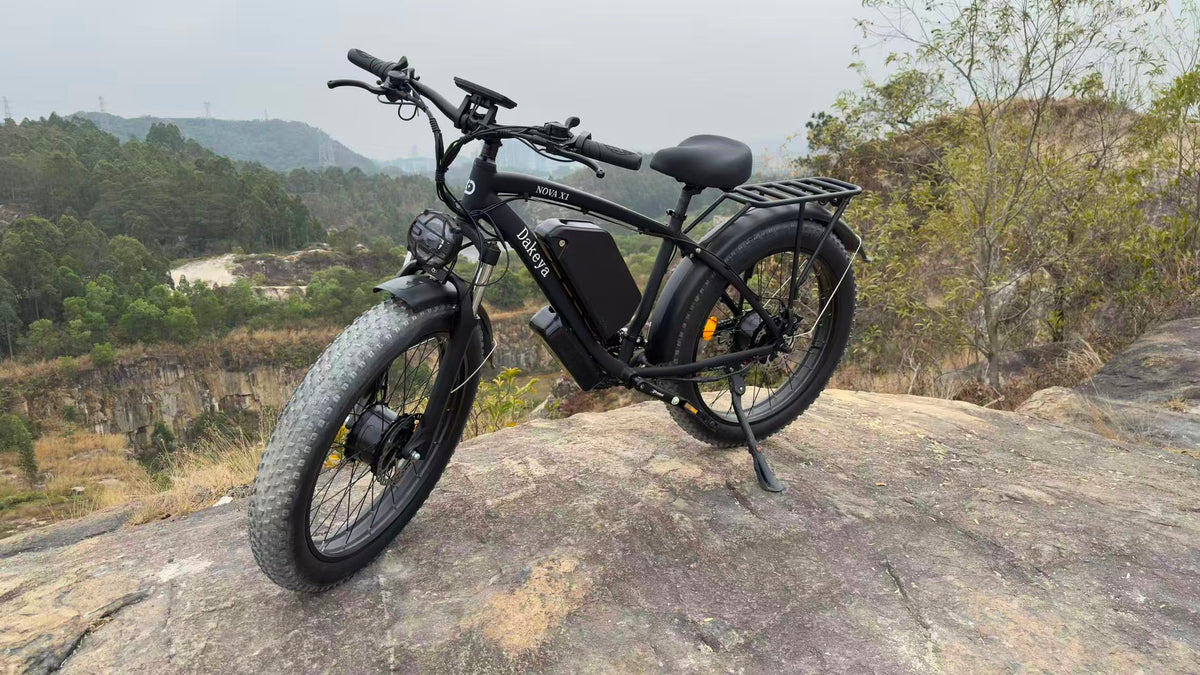
The schedule also suits Dakeya’s current dual-motor fat-tire models. The NOVA X1 uses 26×4 tires, hydraulic brakes, front suspension, dual motors with 6000W combined peak output, and a 60V 25Ah (1500Wh) battery. The DA03 pairs 26×4 tires and hydraulic brakes with front and central suspension, dual motors with 5500W combined peak output, and the same 60V 25Ah (1500Wh) battery capacity. Those specifications make consistent inspection especially worthwhile.

After Every Ride: Clean, Dry, and Notice Changes
Let the bike cool and remove loose dirt
After a normal dry ride, a soft brush or clean microfiber cloth may be all the bike needs. After mud, sand, or salty roads, remove contamination before it dries into the drivetrain, brake area, suspension surfaces, or fastener recesses.
Turn the bike off before cleaning. If the battery or display is removable, follow the manual before removing anything. Use a damp cloth and a gentle stream only where appropriate. Do not pressure-wash the bike, submerge it, or direct water at motor hubs, the battery mount, charging port, display, controller area, bearings, suspension seals, or electrical connectors. High-pressure water can force moisture past seals and move grit into places that are difficult to dry.
Avoid spraying degreaser or lubricant near brake rotors and pads. Wipe the frame, wheels, and accessible components, then dry the bike thoroughly. Make sure the charging port is clean, dry, and closed before connecting the charger.
Give the tires and wheels a post-ride look
Check each 26×4 tire for cuts, embedded glass or thorns, sidewall damage, unusual bulges, and tread wear. Compare the front and rear tire rather than assuming they age at the same rate. Set tire pressure only from the tire sidewall, current product guidance, and riding conditions—there is no single pressure that is correct for every rider and surface.
Spin each wheel and watch the rim relative to the frame or fork. A small visual deviation, rubbing sound, newly loose spoke, or repeated clicking deserves attention. Do not keep riding a wheel that is visibly distorted, contacts the frame, has broken spokes, or shows damage around the rim or hub.
Record anything that felt different
A short note can reveal a pattern before a failure does. Record new brake noise, a lever that feels different, drivetrain skipping, wheel vibration, suspension leakage, intermittent power, error codes, or a connector that came loose. Photos are useful when contacting support or a qualified e-bike technician.
Monthly: A Deliberate Mechanical and Electrical Inspection
“Monthly” is a practical reminder, not a manufacturer-mandated interval. Inspect more often if you ride frequently or in demanding conditions.
Tires, rims, and spokes
Clean enough dirt away to inspect the full tire circumference and both rim sides. Look for cracking, cuts, exposed casing, dents, and damage near the valve. With the bike supported safely and powered off, check for obvious wheel play. Gently compare spoke tension by feel and sound; the goal is to identify outliers, not to true the wheel by guesswork.
Spoke tension and wheel truing are precision jobs. If several spokes feel loose, the wheel moves side to side, or the rim is damaged, stop using the bike and have the wheel assessed. Dual-motor hub wheels also carry motor wiring, so careless wheel removal can damage cables or connectors.
Hydraulic brake pads and rotors
Inspect the pads through the caliper opening where possible, following the manual. Replace pads before the friction material is exhausted; pad design and wear limits vary, so use the component documentation rather than a generic number. Examine each rotor for deep scoring, discoloration, contamination, cracks, or visible warping.
The brake lever should feel consistent and should not pull unusually close to the grip. Persistent rubbing, reduced stopping power, fluid around a lever, hose, or caliper, or a spongy lever can indicate a problem requiring service. Never touch braking surfaces with oily hands, and never apply chain lubricant near them. If a rotor or pad may be contaminated, do not try to “ride it clean.”
Chain and drivetrain
Wipe the chain and inspect it for rust, stiff links, damaged links, or persistent noise. Apply a bicycle-chain lubricant suitable for the conditions, using a small amount on the rollers, then wipe away excess. More lubricant is not better: it attracts grit and can migrate toward the brakes.
Shift through the gears in a safe, controlled way and listen for skipping or hesitation. Check the chainring, cassette, derailleur, and guard for visible damage or debris. Chain wear is best measured with an appropriate gauge. A shop can confirm whether the chain, cassette, or chainring needs replacement rather than changing parts by appearance alone.

Suspension and frame
For the NOVA X1, inspect the front suspension. For the DA03, inspect both the front and central suspension areas. Wipe exposed suspension surfaces with a clean cloth and look for oil residue, damaged seals, scratches, unusual play, or hardware that appears to have shifted. Do not open, pressurize, or internally service suspension components unless the manufacturer’s instructions say you are equipped to do so.
Continue around the frame, handlebar, stem, racks, fenders, crank area, and pedals. Look for cracks, deformation, corrosion, loose parts, or evidence that a component has moved. Use only the correct published torque specifications for the exact fastener and component; do not substitute a guessed value.

Motor cables and connectors
Trace the accessible front- and rear-motor cables without pulling on them. Look for cuts, flattened sections, abrasion, tight bends, melted areas, exposed conductors, loose retaining hardware, or a cable rubbing a tire, rotor, or moving suspension part. Inspect accessible connectors for separation, bent housings, corrosion, or moisture.
Do not open sealed motor, controller, or battery components. Do not disconnect connectors merely for curiosity, and never probe high-current contacts with metal tools. If power cuts in and out, a connector becomes hot, insulation is damaged, or an error returns after a restart, stop riding and seek qualified diagnosis.
Seasonally: Reset the Bike for the Conditions Ahead
At the start and end of a riding season—or whenever weather and usage change significantly—perform the monthly inspection plus a broader review.
Clean the bike thoroughly but gently. Check tire aging and wear, wheel condition, brake-pad life, rotor condition, chain wear, shifting, suspension surfaces, cable routing, lights, and all rider-contact points. Ask a qualified shop to inspect areas you cannot assess confidently, especially after a crash, hard impact, deep mud exposure, or repeated wet-weather riding.
Road salt deserves prompt cleaning because it accelerates corrosion. Sand can work into drivetrains and brake components. Long, steep descents may wear brake pads faster. Seasonal service should follow actual use, observed condition, and the applicable manuals—not a one-size-fits-all mileage claim.

Battery charging and storage
Use only the charger specified for the battery, charge in a dry, ventilated location away from flammable materials, and inspect the battery case, mount, cable, plug, and charge port before use. Never charge a battery that is swollen, cracked, leaking, unusually hot, wet inside, or badly impact-damaged. Keep it away from extreme heat and follow the manual for storage charge level, temperature, inspection, and periodic recharging.
For a fuller storage routine, see the NOVA X1 and DA03 battery winter storage guide and the broader guide to how long e-bike batteries last.
Dakeya battery samples have UN38.3 and MSDS documentation. Those documents relate to battery transport testing and safety data; they are not a claim that the complete bike is UL 2849 certified.
When to Stop Riding and Use Qualified Service
Do not ride—and do not charge, where the battery or electrical system is involved—if you find:
- weak or inconsistent braking, a fluid leak, a cracked rotor, or severely worn pads;
- a cracked or deformed frame, fork, wheel, rim, handlebar, or other structural part;
- broken spokes, major wheel wobble, hub play, or a tire with casing exposure or a bulge;
- damaged motor wiring, exposed conductors, scorched connectors, recurring error codes, smoke, or an electrical burning smell;
- a swollen, leaking, cracked, submerged, impact-damaged, or unusually hot battery;
- suspension leakage, binding, abnormal movement, or damage after a hard impact;
- any fault you cannot identify or repair using the correct manual, tools, and training.
Qualified service is not an admission that maintenance failed. It is part of responsible ownership—especially for hydraulic brakes, hub-motor wheels, battery systems, wheel truing, structural damage, and internal suspension work.
A Sustainable Routine Beats a Rescue Repair
The most useful high-power e-bike maintenance schedule is the one you repeat: gentle cleaning and observation after rides, a deliberate monthly inspection, and a deeper seasonal review. Keep notes, respond to changes early, and use published specifications for your exact bike and components. That cadence helps the NOVA X1, DA03, or another powerful fat-tire e-bike remain predictable instead of becoming a collection of surprises.


Share:
What to Expect After Ordering a Dakeya NOVA X1 or DA03: Delivery, Assembly & First-Ride Setup